

Snow day superstitions are the fun rituals kids try the night before a storm, from inside-out pajamas to flushing ice cubes.
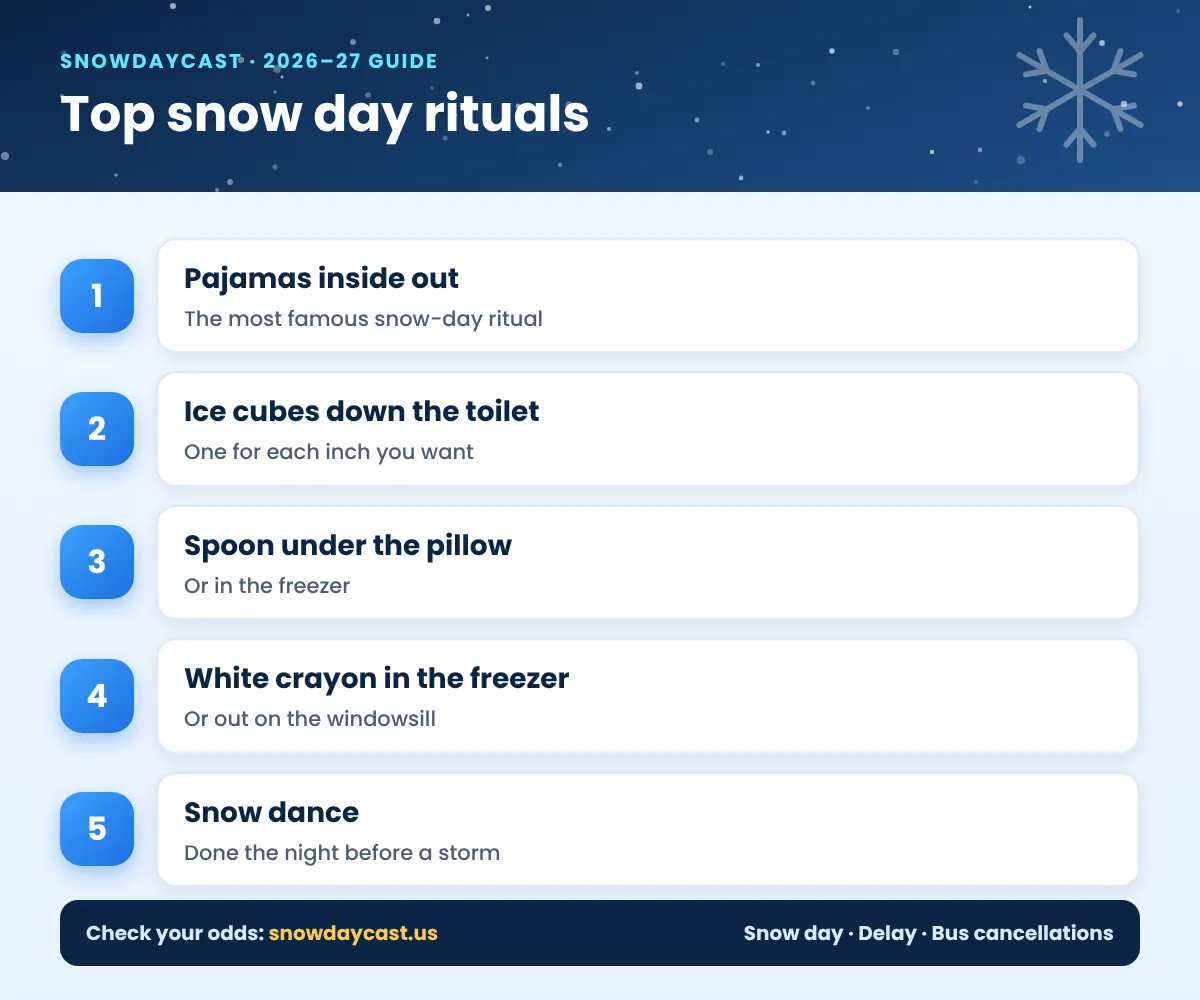
The most popular snow day superstitions are wearing pajamas inside out, flushing ice cubes down the toilet, sleeping with a spoon under your pillow, putting a white crayon in the freezer and doing a snow dance. They’re fun, but only the forecast and your district decide a snow day.
Key takeaways
- Superstitions are traditions, not forecasts.
- Most kids combine several rituals the night before a storm.
- The real snow-day factors are timing, ice and wind chill.
The 12 classic snow day rituals
- Pajamas inside out (or backwards). The undisputed champion.
- Ice cubes down the toilet: some say one per inch of snow you want.
- A spoon under the pillow, or in the freezer, or on the windowsill.
- A white crayon in the freezer or on the windowsill.
- The snow dance, done outside or around the kitchen.
- Run around the dining table a set number of times.
- Socks inside out for extra luck.
- Leave homework undone, a risky strategy.
- Ice cubes thrown at a tree or into the yard.
- Sleep with the window cracked “to let the snow in.”
- Put a white sock on your door handle.
- Say “snow day” before bed, sometimes three times.
What actually brings a snow day
| Real factor | Why it matters |
|---|---|
| Snow from about 3–8 AM | Lands right as buses start |
| Freezing rain or sleet | Ice is more dangerous than snow |
| Wind chill | Unsafe for students at bus stops |
| Winter Storm Warning | Shows forecasters are confident |
| How used to snow your area is | Southern districts close for less |
Want the real odds? Do your rituals, then check our snow day calculator for your ZIP or postal code.
Make it a family tradition
Snow-day rituals are a great way to make winter fun: pick a family “snow-day playlist,” make hot chocolate the night before a storm, and keep a list of snow day activities ready in case the call comes.
Why snow day superstitions are so popular
These rituals give kids something to do while they wait for the forecast. They’re passed down from older siblings, classmates and parents, and every school seems to have its own version. Some families make them a winter tradition: everyone wears pajamas inside out, the youngest flushes the ice cubes, and the whole family checks the snow day calculator before bed.
Rituals from around the country
- Northeast: ice cubes down the toilet and a spoon under the pillow are classics.
- Midwest: a white crayon in the freezer and running around the table.
- South: snow dances and inside-out pajamas, often hoping for even an inch.
- Canada: similar rituals, plus hoping for bus cancellations.
Turn snow day superstitions into science
Make it a learning moment: track which rituals your family tried and compare them with what the forecast said and what actually happened. Kids quickly see that timing, ice and cold matter more than rituals. The NWS winter safety guide explains the real weather behind school closures in kid-friendly terms.
The night-before snow day routine
- Check the forecast and your snow day odds.
- Put on pajamas inside out.
- Flush a few ice cubes.
- Put a spoon under your pillow.
- Leave a white crayon on the windowsill.
- Do one snow dance with the family.
- Lay out boots and mittens, just in case.
Do teachers believe in these rituals?
Plenty of teachers admit they try a ritual or two. Some classrooms even do a group snow dance before a big storm. It’s harmless fun that builds excitement, and it’s a good way to talk about weather, probability and the difference between luck and science.
Frequently asked questions
Do snow day superstitions work?
No. They are fun traditions, but only the weather and your district's decision decide a snow day.
What is the most popular snow day superstition?
Wearing your pajamas inside out (or backwards) is the most widely known, often combined with flushing ice cubes and a spoon under the pillow.
Where do snow day superstitions come from?
Most spread through schools and families over generations, and later through social media. There's no single origin.
What actually predicts a snow day?
Snow and ice during the early-morning commute, wind chill, and National Weather Service warnings. Our calculator uses those factors.
Keep reading
 Snow Day Basics · 6 min readHow Much Snow for a Snow Day? (2027 Guide by Region)It depends on where you live: an inch can close schools in the South, while northern districts may need 6–12 inches. Here…
 Snow Day Basics · 4 min readSnow Day vs. 2-Hour Delay vs. Early Dismissal: What's the Difference?A delay pushes the start of school back so roads can be cleared; a snow day closes school for the day; an…
 Snow Day Basics · 5 min readHow Do Schools Decide Snow Days? Inside the 5 AM CallSuperintendents usually make the snow-day call between 4:30 and 6:30 AM after checking forecasts, driving the roads and talking to transportation teams.